
January marks more than the beginning of a new year — it marks renewed life for Linda Lee.
On Jan. 1, 2024, Linda received a life-saving lung transplant after a long and complex journey with pulmonary fibrosis. Two years later, she is breathing easier and is grounded in gratitude, strength and a deep appreciation for life’s second chances.
Lung Transplant for Pulmonary Fibrosis
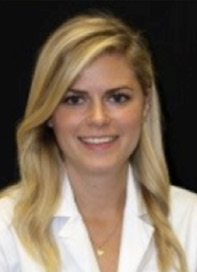
Pulmonary fibrosis is a condition where scar tissue builds up in the lungs. Over time, the scar tissue thickens, making it difficult to breathe. Dr. Holly Keyt is the medical director of lung transplantation at University Health Transplant Institute and was one of the pulmonologists who treated Linda. Dr. Keyt says that some therapies can slow the progression of pulmonary fibrosis, but there is no cure.
“The life expectancy for a person diagnosed with pulmonary fibrosis depends on the underlying cause,” said Dr. Keyt. For idiopathic pulmonary fibrosis (IPF), which is the most common and most severe form of the disease, “the average survival expectancy is 3-4 years from diagnosis.”
Linda’s condition was brought on by interstitial lung disease linked to mold exposure. Years of living with the condition undiagnosed slowly made even simple moments feel out of reach.
“I would go to doctors and say, ‘I can’t breathe,’ and I was told everything looked fine,” Linda shared.
Dr. Keyt explains that people with pulmonary fibrosis may have a cough that is typically described as dry or non-productive. “It can interfere with important parts of life,” Dr. Keyt said. “Suddenly sleeping, talking and laughing seem impossible.”
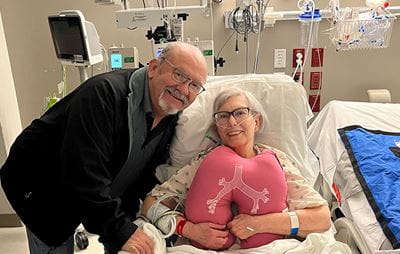
Answers finally emerged when Linda found the right care at University Health. After extensive testing and evaluation, Linda was waitlisted for a lung transplant on Dec. 19, 2023. Just weeks later, in the early hours of New Year’s Day, she received the call that would change everything.
“At 1:20 in the morning, I got the call,” Linda recalled. “My legs got a little weak, but I knew this was the thing that was going to save my life.” A lung had become available for transplant, and Linda rushed to University Hospital for the surgery.
Life After Lung Transplant
Linda’s transplant journey didn’t end in the operating room.
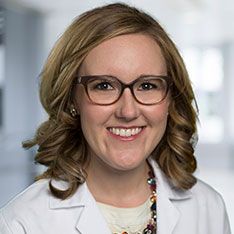
Dr. Lara Jones, a transplant pulmonologist who also assisted with Linda’s care, notes that recovery after a transplant looks different for every patient. “In general, recovery unfolds over months, with most patients spending two to three weeks in the hospital after surgery,” said Dr. Jones. “This is followed by several months of close monitoring, pulmonary rehabilitation, frequent clinic visits and occasionally additional hospitalizations.”
In Linda’s case, she started pulmonary rehabilitation and immunosuppressant medications while in the hospital to reduce the risk of her body rejecting the new organ.
“By about three months, many patients have regained strength and are returning to daily activities, and by six to 12 months, many are beginning to enjoy their new normal,” Dr. Jones added.
Recovery brought challenges, including complications that required additional hospital stays. Through every setback and milestone, Linda leaned on her care team, her faith and the support of her husband, Michael, and their family.
“I’ve worked really hard my whole life to stay positive,” she reflected. “Be kind. Just be kind.” Linda spent much of her career devoted to education, serving students in special education and leadership roles across the country.
“For many, lung transplant is best viewed not as a cure but as a chance at longer life and improved quality of life with ongoing medical care,” said Dr. Jones.
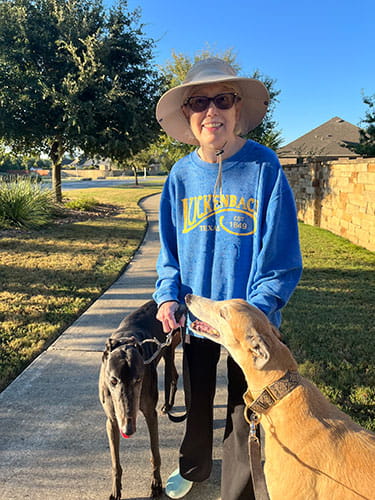
Now, two years post-transplant, Linda continues to move forward. She feels stronger, more grounded and inspired to give back. She hopes to one day support other transplant patients as a volunteer, offering understanding, encouragement and hope from someone who has walked the path before them.
As we welcome a new year, we celebrate Linda’s courage. Her journey is a powerful reminder that healing takes time, growth continues long after transplant, and new beginnings can unfold — even years later.
Lung Transplant at University Health
A lung transplant always involves long-term follow-up care and rehabilitation. University Health in San Antonio is a world-class transplant institute with a comprehensive pulmonary therapy program.
According to the Scientific Registry of Transplant Recipients, our patients experience shorter wait times for lung transplants than the national average, reflecting our high-quality care and improved patient outcomes, making us one of the best hospitals for lung transplants in South Texas.