
A stroke and a heart attack are two distinct medical emergencies caused by blood not flowing to the proper organ.
A stroke occurs when blood is prevented from flowing to the brain or when a blood vessel in the brain bursts. During a heart attack, blood is prevented from flowing to the heart.
Both conditions can result in permanent damage and require emergency medical care. Often, patients require rehabilitation after these medical events. In both cases, timely access to care leads to better results.
Throughout this blog, we will share ways you can prevent stroke and heart attacks.
Symptoms of Heart Attack
Dr. James Keeton, a cardiologist at University Health, said blocked blood vessels cause heart attacks.
Signs of heart attack may include:
- Chest discomfort such as pressure, heaviness or pain
- Shortness of breath
- Pain or discomfort in one or both arms, back, neck, jaw or even the abdomen
- Abnormal heart palpitations
- Lightheadedness, nausea or sweating
Women tend to have different heart attack symptoms than men. People with diabetes also have atypical presentations and even “silent heart attacks.” Dr. Keeton said, “People with diabetes don’t necessarily lack symptoms. Instead, they experience unusual symptoms such as generalized weakness, upper abdominal pain, nausea and vomiting.”
Symptoms of Stroke
Dr. Sujani Bandela is a vascular neurologist specializing in stroke care at University Health. “A stroke happens when a blood vessel that carries oxygen to the brain is blocked or bursts,” said Dr. Bandela.
Signs of a stroke may include:
- Dizziness
- Inability to speak clearly/slurred speech
- Loss of balance
- Drooping on one side of the face
- Weakness or numbness on one side of the body
The two main types of strokes are ischemic and hemorrhagic.
Ischemic stroke is due to a vessel that has blockage, such as a clot, and hemorrhagic is due to a vessel bursting.
“When you have a stroke, your symptoms will depend on the stroke has happened,” Dr. Bandela said.
BE FAST to Spot a Stroke
Symptoms of stroke can affect one or both sides of your body. They can be remembered by the acronym, BE FAST:
- B - Balance problems
- E - Eyes blurry or loss of vision
- F - Face drooping on one side
- A - Arm or leg weakness and/or numbness
- S - Speech problems
- T - Time (this person needs emergency medical care, and every second counts)
Getting treatment quickly is important to ensure the reversal of these effects. “The longer we keep the brain without oxygen supply, the more chance you have of brain damage and potentially irreversible symptoms,” Dr. Bandela said.
University Health provides the highest level of stroke care. Learn more on our website.
Risk Factors for Stroke and Heart Attack
While strokes and heart attacks are different, the factors that increase your risk of having either are similar.
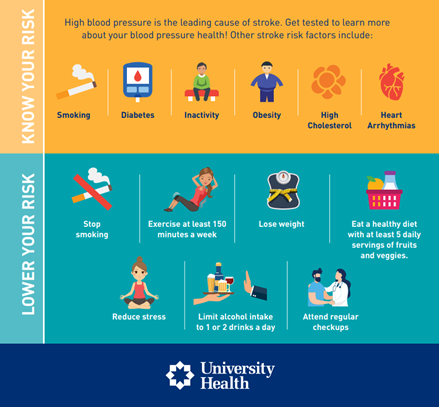
Risk factors include:
- High cholesterol
- High blood pressure
- Diabetes
- Obesity
- Tobacco
- Smoking
- Stress
- Some heart conditions, like atrial fibrillation
- Illicit drugs, such as cocaine
Treatment for Heart Attack
Treating a heart attack is similar to treating a stroke because they are both caused by problems with your blood vessels.
“For the most part, the goal for treating both is similar – save a heart muscle in a heart attack and save brain function in a stroke,” Dr. Keeton said. “With a heart attack, it’s about getting to the cath lab for an intervention to open up the blocked artery using a balloon and stent, also known as percutaneous coronary intervention.”
Treatment for Stroke
To treat a stroke, your doctor may give you blood thinning medication to dissolve the clot, and/or your doctors may try to surgically remove the clot.
Dr. Bandela said “the quicker the better” when it comes to treating a heart attack and a stroke. “Neither the brain nor the heart regenerate – once those cells die, they are gone forever.”
Treating a stroke and a heart attack are both time-sensitive because neither organ can function properly without oxygen.
Outlook and Recovery
Early intervention to restore blood flow during a heart attack is key. Depending on the size of the area supplied by the blocked artery, a significant portion of your heart muscle may die, which would permanently impact your heart function. You may experience long-term effects such as heart failure or abnormal heart rhythms.
If the damage to the heart muscle is too extensive, you will die.
Similarly, early intervention during a stroke preserves brain function. Lack of blood flow to key areas of the brain can lead to permanent deficits.
Recovery from stroke will look different for each person. “If part of your brain dies during a stroke, the rest of the brain takes over and tries to create new networks to do the things that that area of the brain was doing before, which is called neuroplasticity,” Dr. Bandela said.
Coming in quickly when you begin experiencing the signs or symptoms of a heart attack or stroke is of utmost importance. Dr. Bandela urges patients to not “sleep it off” or ignore symptoms. “Recognize the symptoms, know how important it is to get to yourself to the hospital and don’t wait,” Dr. Bandela said.
Lower Your Risk for Stroke
To lower your risk for stroke, Dr. Bandela said you should pay attention to the modifiable risk factors, or the things you can change, which are:
- Eating well
- Exercising
- Preventing obesity or losing weight
- Controlling blood pressure
- Controlling high cholesterol
- Managing diabetes
- Treating obstructive sleep apnea
- Managing stress
- Getting good quality of sleep
- Not doing illicit drugs such as cocaine
- Compliance with your prescribed medications
- Routine follow-up and communication with your primary care provider to manage your risk factors and together lower your overall risk
Nationally Recognized Care at University Health
When every second counts, trust the experts.
The heart team at the University Health Cardiovascular Center has been nationally recognized and is one of only two hospitals in San Antonio to receive the Cardiac Cath Lab with PCI Accreditation from the American College of Cardiology (ACC). This makes us a center for advanced cardiovascular care.
In addition to our Cardiovascular Center, University Hospital is also recognized by the American Heart Association and the only San Antonio hospital certified by The Joint Commission as a comprehensive stroke center. This means we are equipped with the finest medical experts and technology to treat people who have experienced a stroke.