

What started as a routine reelection campaign, quickly became a life-altering chapter for Precinct 1 Bexar County Commissioner Rebecca Clay-Flores. In November 2024, just as early voting began, Clay-Flores was diagnosed with colon cancer. The diagnosis came as shocking news for someone with no family history of the disease.
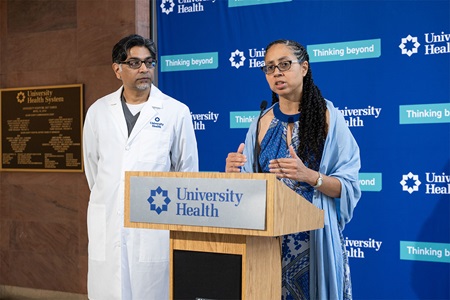
For months, Commissioner Clay-Flores had sensed something wasn’t right. “I knew something was wrong with my body all year,” she recalled. Just before early voting, she found out she had a bleeding tumor in her colon. Within 24 hours, Commissioner Clay-Flores pushed her fears aside and reframed her focus, “I had to get myself together,” she said.
After a six-hour surgery and five days at University Health, Commissioner Clay-Flores is now on a mission to raise awareness about a disease that affects many people.
What is Colon Cancer?
Colon cancer is the second leading cause of cancer-related deaths in the United States. Dr. Sandeep Patel, a gastroenterologist at University Health, says, “by 2030, it’s projected to become the leading cause for people under 60.”
This type of cancer originates in the colon, which is part of the large intestine. Colon cancer is often talked about together with rectal cancer under the name of “colorectal cancer.”
Colon cancer is often slow-growing, meaning abnormal cells develop into growths called polyps, which form on the lining of the colon (or the rectum). Polyps can take up to 15 years to develop into cancer, but they may never become cancerous during that time. Because of this, a gastroenterologist could remove the polyps before they become cancerous.
Colon Cancer Symptoms
In many cases, colon cancer may not cause any noticeable symptoms, particularly in its earliest stages. As it grows and spreads, Dr. Patel says it can cause several symptoms, including:
- Bloody stool
- Changes in bowel habits that last more than a few days
- Diarrhea or constipation that doesn’t resolve quickly or recurs
- Fatigue
- Iron-deficiency anemia
- Persistent bloating or a feeling of abdominal fullness
- Stools in a thinner shape than usual
- Weight loss with no known cause
Because these symptoms primarily relate to the digestive system, they can seem embarrassing or simply too personal to share. But it’s important to know what’s normal for you, bowel-wise, and to talk with a medical provider when you experience something out of your norm.
Why Are Colon Cancer Screenings Important?
Colorectal cancer doesn’t always cause symptoms, especially in its earliest stages, when it’s most easily treatable. Colorectal cancer screenings provide an invaluable tool for detecting colon cancer or rectal cancer even before it causes symptoms.
A medical provider can help you determine which type of screening is best for your needs.
What is a Colonoscopy?
If other screenings discover abnormalities, a colonoscopy will be recommended.
A colonoscopy remains the gold standard for colorectal cancer screening because it is the only one that scopes the entire colon and rectum. It also allows the gastroenterologist to remove a precancerous polyp during the test.
When Should I Get Screened for Colon Cancer?
“The average recommendation for people to begin screening is 45 years old,” says Dr. Patel.
If you have certain risk factors, your medical provider may recommend you begin screening earlier or have screenings more frequently.
Colon Cancer Risk Factors
Factors that place you at a higher risk of developing colon or rectal cancer include:
- Having a family history of colorectal cancer
- A diet that consists of a lot of red meat
- Obesity
- Smoking
- Diabetes
- An inactive lifestyle
- A low-fiber diet
Why are Colon Cancer Screenings Important?
“One reason screening is so important is that colorectal cancer doesn’t always cause symptoms, especially in its earliest stages, when it’s most treatable,” says Dr. Patel. Even individuals who feel healthy may not realize they have the disease until it’s detected through screening.
Conversations around colon cancer screening are happening at both the local and national level. Across the country, increased attention has followed high-profile stories — including the death of actors Chadwick Boseman and James Van Der Beek. In recent years, colorectal cancer has also been on the rise among younger adults, adding urgency to these conversations.
Here in Bexar County, the impact is especially close to home. In 2024, the University Health Institute for Public Health reported that the colorectal cancer death rate in Bexar County was higher than both the state and national rates.
Colon Screenings at University Health
Colorectal cancer screenings provide an invaluable tool for detecting colon or rectal cancer early, which is when treatment is most effective and outcomes are often better.
If you are due for a colonoscopy or have digestive symptoms you’d like to have checked out, talk to your primary care provider about requesting an appointment with one of our digestive health experts.
“I want to tell people who are delaying colonoscopies because they're scared or they don't understand, is getting a colonoscopy is way more fun than having surgery for colon cancer,” shares Commissioner Clay-Flores. “Get your colonoscopy because colonoscopies save lives.”